


Choosing the right carport involves more than finding a structure that fits your vehicle’s footprint. Full-size SUVs, pickup trucks, and vehicles equipped with roof racks often require additional space for comfortable parking, passenger access, and everyday use. The right dimensions can help protect your vehicle from sun, rain, and other outdoor elements while making your driveway or parking area more functional. With SUNJOY carport kits, homeowners can explore practical covered parking solutions and plan a setup that suits their vehicles and available outdoor space.
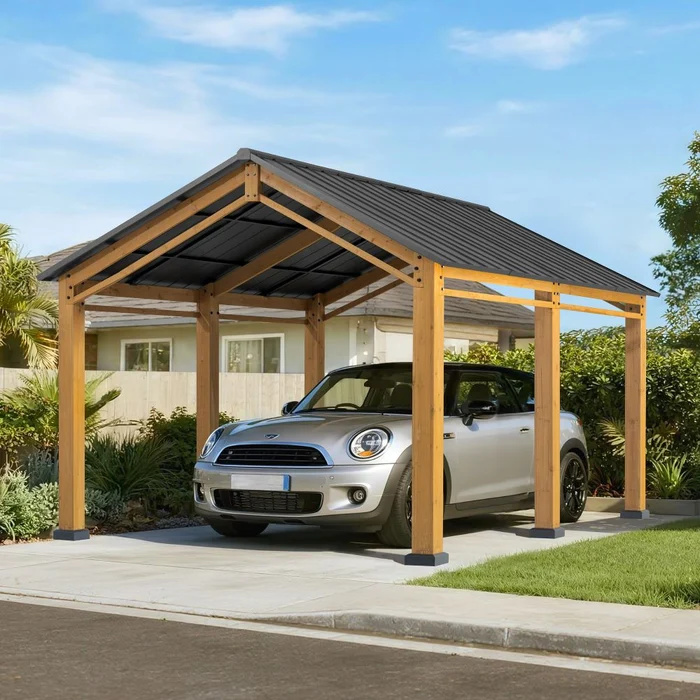
How to Choose the Right Carport Size for Your Vehicle
When asking, “What size carport do I need for an SUV?” start by measuring your vehicle rather than relying on its general category. Two full-size SUVs may have noticeably different lengths, widths, and heights, particularly when one has running boards, a roof box, or other accessories.
A suitable carport should provide clearance on every side, not just enough room to park. Consider the vehicle’s overall width, length, and height, then allow additional space for walking around it, opening doors, and accessing the cargo area. If you regularly carry sports equipment, camping gear, or other bulky items, extra clearance can make daily parking more convenient.
Before choosing among SUNJOY’s portable metal carports, compare your measurements with the dimensions of the available models. The goal is to find a structure that accommodates your vehicle comfortably without taking up more yard space than necessary.
Carport Width: Account for Door-Swing Clearance
Width is especially important for families driving full-size SUVs and pickup trucks. A carport may accommodate a vehicle when its doors are closed but still feel cramped when passengers need to get in and out.
Measure the vehicle at its widest point, including mirrors if they remain extended during parking. Then consider how far the front doors swing open and whether passengers need room to load child seats, groceries, tools, or outdoor equipment. If you park beside a fence, wall, or storage area, account for that obstruction as well.
For a single-vehicle carport, a wider layout can make a meaningful difference in everyday usability. Pickup truck owners should also consider the space needed to access the truck bed and retrieve equipment. Rather than choosing the narrowest structure that fits, prioritize enough side clearance for normal activities.
Carport Length: Leave Room for Long Vehicles
Full-size SUVs and crew-cab pickup trucks can occupy substantial parking space, especially when a truck has a long bed or the vehicle carries a rear-mounted accessory. Measuring bumper to bumper provides a reliable starting point for selecting carport length.
Additional room at the front and rear helps prevent the vehicle from sitting too close to the frame or roof supports. It can also make maneuvering easier when entering or leaving the parking area. If you frequently open a rear hatch or tailgate, allow enough clearance for it to operate without contacting nearby objects.
The surrounding driveway matters, too. A carport that fits the vehicle itself may still be inconvenient if there is insufficient room to approach it or turn into the parking space. Consider the full parking movement before settling on a size.
Carport Height Clearance for Roof Racks and Accessories
Height is easy to overlook when choosing a carport, particularly for SUVs with roof racks, cargo boxes, bike carriers, or other mounted equipment. The vehicle’s factory height may not reflect its actual height when fully equipped.
To determine the appropriate carport height, measure from the ground to the highest point of the vehicle with all regularly used accessories installed. Include roof-mounted cargo and any equipment that remains attached while parking. Leave additional clearance for uneven ground, vehicle movement, and comfortable entry beneath the structure.
Roof clearance also depends on the carport’s design. Check whether the listed height refers to the overall structure or the usable clearance beneath its frame. For SUNJOY carport kits, review the specifications of the individual model carefully and compare them with your vehicle’s actual dimensions before making a decision.
Why Carport Kits Require Careful Site Planning
Carport kits offer a practical option for homeowners looking to create covered parking without building a permanent garage. However, selecting the right dimensions is only one part of the process. The available installation area, ground conditions, frame layout, and anchoring requirements also affect the final setup.
Before purchasing, measure the intended parking area and check for nearby fences, trees, garage doors, and overhead obstructions. Confirm that the selected model fits within the available space and that its installation requirements suit the site. Local building codes, permit requirements, and applicable wind or snow-load considerations should also be reviewed.
SUNJOY’s portable metal carport collection provides a starting point for comparing covered parking options. Reviewing each product’s dimensions, materials, and installation requirements can help you choose a structure that aligns with your vehicle and outdoor layout.
Make Your Carport Work for Everyday Parking
A well-sized carport should accommodate more than a stationary vehicle. It should make arriving home, opening doors, unloading groceries, accessing roof-mounted gear, and retrieving items from a truck bed straightforward.
For the best fit, measure your vehicle with its usual accessories, account for door and tailgate movement, and allow enough room to maneuver comfortably. Then compare those measurements with the carport’s usable interior dimensions rather than relying on exterior measurements alone.
With careful planning and the right SUNJOY carport kit, homeowners can create a covered parking area that balances vehicle protection, practical clearance, and efficient use of outdoor space.
